Starting a YouTube channel with broad, disconnected video ideas often leads to slow channel momentum, confusing audience signals, and creator burnout. When one video covers PC hardware, the next explores travel vlogging, and a third covers mobile gaming, your uploads tend to attract completely different viewer groups with conflicting interests. Learning how to find the right youtube niche enables you to establish a focused topic foundation that builds a reliable returning audience over time.
A sustainable niche is not simply a random topic you enjoy on the weekend. It represents the strategic intersection between viewer demand, production feasibility, personal domain interest, and commercial monetization. Understanding how to find the right youtube niche ensures you evaluate market saturation and audience retention dynamics before investing months into unviable video concepts.
In this practical strategic guide, we cover 5 proven steps on how to find the right youtube niche grounded in verified creator discovery patterns and sustainable channel architecture.
Table of Contents
Why Choosing the Right Niche Dictates Channel Growth
Before publishing content across various topics, evaluating why niche clarity matters to audience development is crucial. When creators research how to find the right youtube niche, channel direction typically influences performance in three vital areas:
- Audience Return Rates and Consistency: YouTube evaluates recommendations on a viewer-by-viewer basis according to individual watch history and satisfaction. When videos jump across disconnected subjects, viewers who enjoyed a specific topic may simply skip unrelated future uploads, making it harder to build a cohesive returning audience.
- Content Packaging Efficiency: Focusing on a clearly defined niche allows you to develop repeatable title structures, thumbnail visual hooks, and scripting frameworks that resonate with a specific demographic.
- Commercial Viability and Sponsorships: While viewer revenue per mille (RPM) depends on country demographics, seasonality, and ad format demand, targeted topics with clear commercial intent (such as software workflows, technical tools, or specialized industries) often offer more direct affiliate and sponsorship pathways.
For official guidance on audience discovery and system features, consult the YouTube Help Center on Video Discovery to review how viewer interest guides recommendations. If your existing uploads struggle to maintain audience attention throughout the video, review our strategic tutorial on how to fix YouTube shorts low retention to improve viewer engagement signals.
Step 1: Identify Your Core Venn Diagram of Competence and Demand
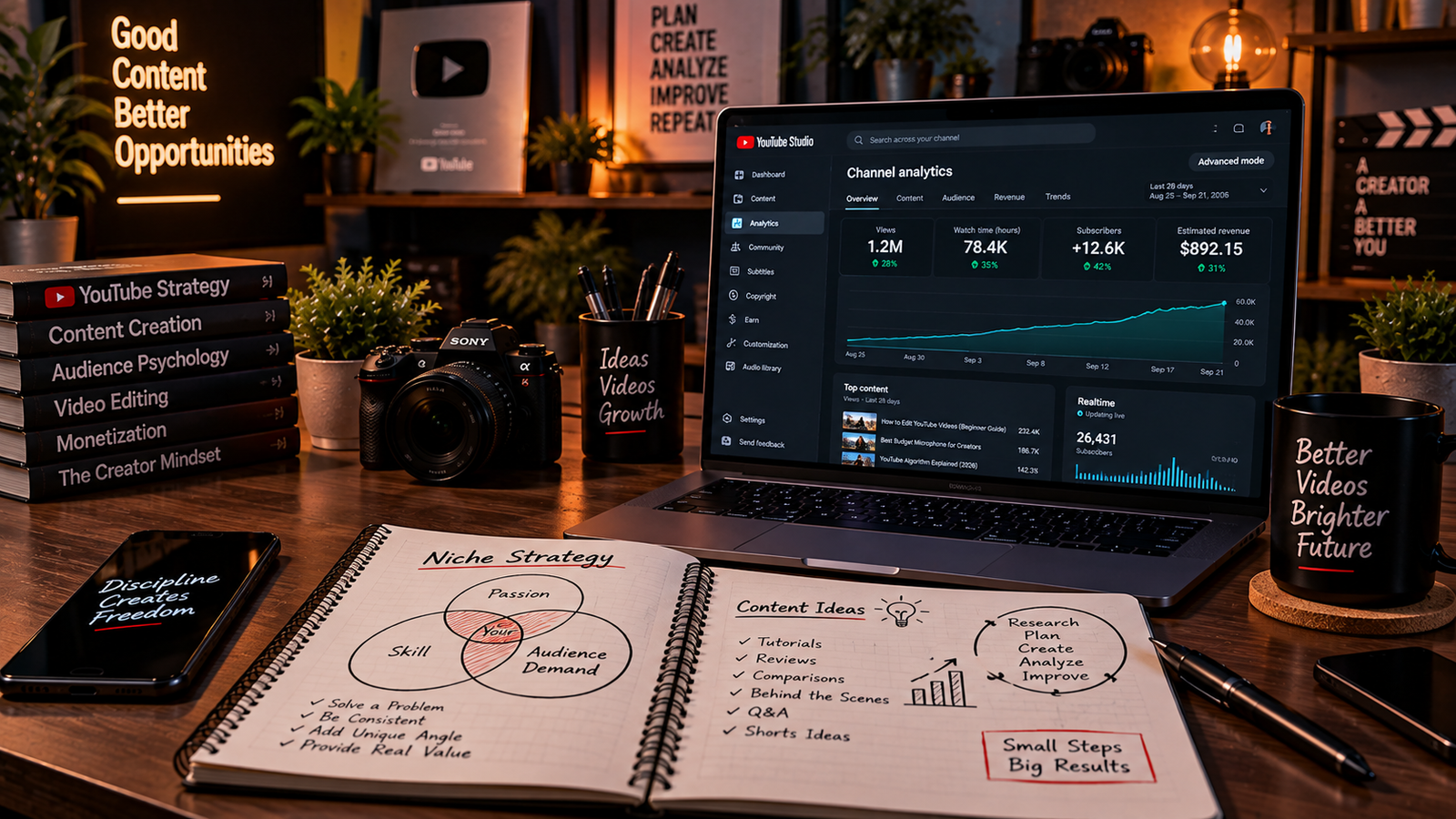
The foundation of a durable channel is finding the overlap between topics you can produce consistently and topics viewers actively seek out.
Step-by-Step: Map Your Topic Matrix
- Divide a blank sheet into three distinct columns: Personal Expertise / Curiosity, Audience Problem / Demand, and Commercial Potential.
- Under personal expertise, list 5 to 10 topics you can comfortably discuss or demonstrate without extensive pre-scripting fatigue.
- Under audience demand, identify common pain points, questions, or curiosity gaps within those subjects that regular viewers frequently encounter.
- Under commercial potential, determine whether products, software tools, or paid solutions exist within that space.
- Identify the overlapping areas where all three columns intersect.
Mapping these intersecting factors establishes an authentic starting point when determining how to find the right youtube niche.
Step 2: Validate Search Demand and Recommendation Potential
A viable niche must possess sufficient audience interest to sustain ongoing viewership without trapping your channel in low-volume search queries.
Step-by-Step: Test Topic Volume
- Use YouTube search autosuggest by typing seed keywords related to your topic followed by common search modifiers (such as how to, vs, best, or for beginners).
- Note recurring search phrases populated by the platform’s search index.
- Look for active channels of varying sizes operating within your intended topic area to confirm ongoing viewer interest.
- Analyze whether recent uploads across the topic consistently attract viewership, indicating an active audience appetite.
- Verify whether the niche relies primarily on search queries or also supports browse and suggested video discovery through curiosity-driven packaging.
Validating active audience traffic prevents publishing content into an empty category, serving as a dependable phase on how to find the right youtube niche.
💡 Creator Resource: Experiencing audio sync drift, export freezes, or render crashes across your creative software? Search our master Creator Troubleshooting Database: 5,000+ Production Fixes to resolve technical snags quickly.
Step 3: Narrow from Broad Categories into Specific Micro-Niches
Attempting to compete directly within massive macro-categories (such as “Gaming”, “Fitness”, or “Tech Reviews”) pits beginner creators against established production teams with extensive production budgets.
Step-by-Step: Execute Micro-Niche Sub-Division
- Select your target macro-category (e.g., Video Editing).
- Sub-divide by software platform (e.g., DaVinci Resolve Tutorials).
- Sub-divide further by specific creator use case (e.g., DaVinci Resolve Workflow for Solo Creators).
- Focus an initial consistent series of videos on this narrow segment to build topical relevance and audience familiarity.
- As your channel develops core viewership and feedback, gradually expand your scope to encompass adjacent topics within the broader ecosystem.
Establishing early clarity within a focused sub-sector provides a reliable blueprint on how to find the right youtube niche.
Step 4: Assess Production Feasibility to Prevent Creator Burnout
Many creators select niches with high theoretical earning potential but discover that the production workflow requires more time and resources than their schedule permits.
Step-by-Step: Calculate Production Overhead
- Break down the production requirements of your target niche: script research, voiceover recording, live demonstration, B-roll sourcing, and timeline editing.
- Estimate the total hours required to produce a single polished video from conception to upload.
- Determine whether your weekly schedule realistically supports producing that format consistently over several months.
- If an elaborate documentary style requires 40 hours per video, consider refining your format toward screen recordings, structured breakdowns, or direct talking-head tutorials.
- Ensure your chosen production format can be sustained reliably without compromising technical quality.
Balancing creative ambition with practical production limits is essential when mastering how to find the right youtube niche.
Step 5: Test Audience Viability with an Initial Pilot Batch
Rather than committing your channel identity to an unverified concept indefinitely, approach your new niche as a structured pilot test.
Step-by-Step: Run the Pilot Evaluation
- Draft 5 to 10 specific, clear video concepts addressing core questions within your chosen micro-niche.
- Produce and upload these videos across a steady release cadence.
- Review your YouTube Studio Analytics after the initial batch has accumulated data.
- Inspect your Returning viewers metric alongside overall reach to evaluate whether viewers return to consume subsequent uploads.
- Evaluate viewer comments and watch duration patterns to confirm whether your content resonates with the intended community.
Evaluating tangible performance metrics from an initial batch completes your strategy on how to find the right youtube niche.
If your newly uploaded videos struggle to initiate distribution in recommendation queues, review our verified guide on how to fix 0 views on YouTube Shorts to troubleshoot platform visibility settings.
YouTube Niche Selection Diagnostic Matrix
Use this quick-reference diagnostic matrix to evaluate your potential content direction when determining how to find the right youtube niche:
| Content Direction Challenge | Potential Diagnostic Factor | Recommended Strategic Action |
|---|---|---|
| Channel attracts views but struggles to build returning viewers | Videos may target disconnected topics, attracting fragmented viewer groups | Focus the next series of uploads on a cohesive sub-topic or specific audience problem |
| Videos generate search views but limited browse recommendations | Topic packaging may rely primarily on narrow utility queries | Experiment with broader curiosity angles, compelling titles, and relatable framing |
| High production demands lead to inconsistent upload schedules | Format complexity exceeds available weekly production capacity | Simplify editing formats to a repeatable presentation style that fits your workflow |
| Channel gains viewership but lacks direct sponsorship pathways | Current topic may lack clear commercial solutions or product alignment | Introduce practical tutorials, workflow tools, or software reviews with natural affiliate fit |
| Creator motivation drops after initial batch of uploads | Topic selection was driven solely by perceived trends rather than interest | Pivot toward topics that balance personal curiosity with verifiable audience interest |
Frequently Asked Questions (FAQ)
Can I change my YouTube niche later without starting a new channel?
Yes, but major topic pivots often require patience. Because YouTube personalizes recommendations to individual viewer preferences, existing subscribers may not watch uploads outside their original interest, which can lead to mixed initial response signals. To pivot smoothly, bridge into adjacent subjects that share overlapping viewer interests before transitioning entirely.
How do I know if a YouTube niche is too saturated?
A competitive niche indicates healthy audience demand. Instead of avoiding competitive areas, examine whether existing channels leave specific questions unanswered, use outdated formats, or overlook beginner perspectives. Finding an underserved sub-niche or delivering clearer, more practical explanations provides a viable way to stand out.
Is it better to focus on commercial potential or personal passion?
Balancing both is essential. Choosing a topic purely for theoretical commercial earnings often leads to burnout if you lack genuine interest in the subject. Conversely, pursuing a narrow passion with minimal viewer interest makes audience growth difficult. The most sustainable approach on how to find the right youtube niche lies in finding where your authentic knowledge intersects with real viewer problems.